


December 1st – 10th | Day Event (with evening musical concerts)
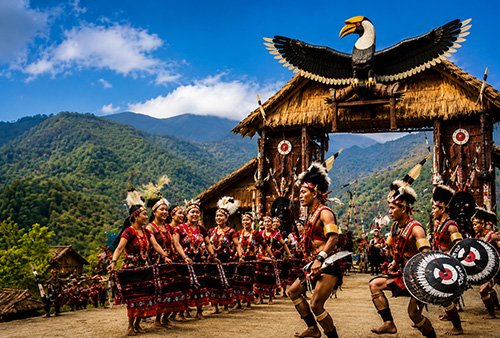 The Hornbill Festival is a massive 10-day celebration that acts as a ‘living museum’ for Nagaland’s 16 major tribes. Held at the Kisama Heritage Village, it is designed to preserve and showcase the state’s warrior history and agricultural heritage.
Rituals & Background: You will witness ceremonial ‘Log Drum’ beating, traditional Naga wrestling, and vibrant war dances. Each tribe has its own ‘Morung’ (communal hut) where they showcase indigenous crafts.
Deity: Primarily a cultural celebration of identity and ancestral pride, though rooted in ancient animist traditions.
Music & Soundscape: The air is a constant blend of the rhythmic ‘Tati’ (a one-stringed instrument) and synchronized chanting. Evenings feature the Hornbill International Rock Contest.
Photography & Visuals: Capture the high-contrast colors of tribal headgear, traditional tattoos, and the dramatic ‘Log Drum’ ceremonies. The golden hour at Kisama offers stunning portraits.
Delicacies: Sample smoked pork with bamboo shoots and fermented soybean (Axone).
Peaks ‘n’ Sands Insight: A masterclass in tribal synergy—witnessing how 16 distinct tribes align for a singular cultural mission.
October/November (Kartik Purnima) | 24-Hour Active Fair (Best visuals at Sunrise/Sunset)
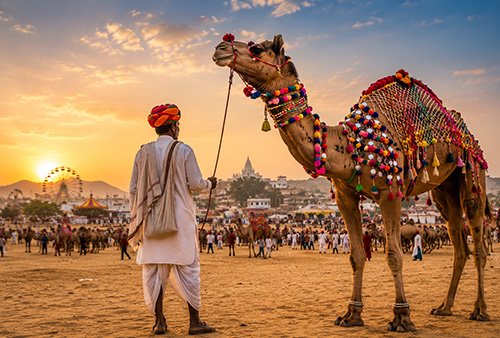 One of the world’s largest livestock fairs, Pushkar is a surreal confluence where the golden Thar Desert meets ancient Hindu spirituality.
Rituals & Background: Features intense camel trading, camel beauty pageants, and highspeed races. Pilgrims perform the ‘Deepdaan’ ritual, floating lamps on the holy lake.
Deity: Dedicated to Lord Brahma; reaches its peak on the full moon night (Kartik Purnima).
Music & Soundscape: Experience the soulful strains of the ‘Kamayacha’ and ‘Sarangi’ played by Manganiyar musicians.
Photography & Visuals: A photographer’s paradise for silhouette shots of camel caravans against the setting sun and vibrant turbans of herdsmen.
Delicacies: Indulge in ‘Malpua’ and ‘Dal Baati Churma’ prepared over open wood fires.
Peaks ‘n’ Sands Insight: The ‘Sands’ of Rajasthan offer a lesson in endurance and the ancient art of desert nomadic survival
June/July | Day Event
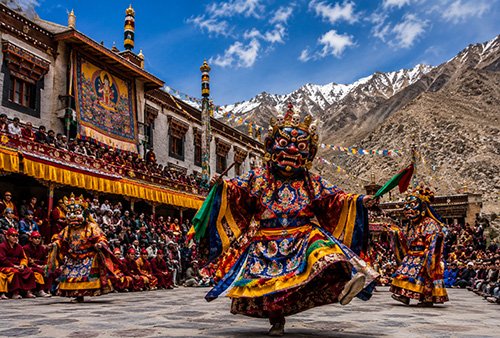 Celebrated at the high-altitude Hemis Monastery, this festival marks the birth of Guru Padmasambhava with vibrant Tibetan Buddhist rituals.
Rituals: The ‘Cham’ dance—mystical masked dances performed by Lamas representing the victory of ‘Dharma’ over demonic forces.
Deity: Guru Padmasambhava (Guru Rinpoche).
Music & Soundscape: Powerful sounds of giant copper trumpets (Dhungchen), clashing cymbals, and deep drums echoing off mountain peaks.
Photography & Visuals: Focus on intricate hand-painted masks and silk robes against the stark, brown Ladakhi landscape.
Delicacies: Warm up with ‘Thukpa’ noodle soup and ‘Gur-Gur Chai’ (salted butter tea).
Peaks ‘n’ Sands Insight: Experience the ‘Peaks’ of spiritual elevation and the discipline required in a harsh Himalayan environment.
February/March | Late Night and Early Morning Rituals
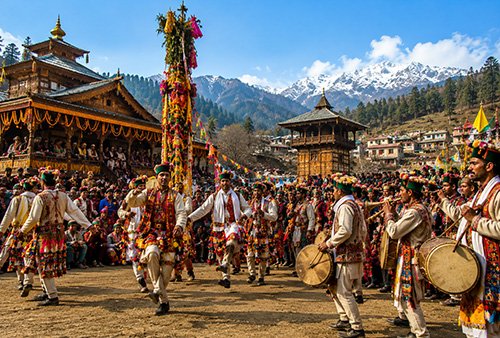 Fagli is an intimate, raw Himalayan ritual marking the end of winter in the Tirthan and Parvati Valleys.
Rituals: Men dress in ‘Bishu’ (grass) costumes and ancient wooden masks, dancing through snow to drive away the winter demon.
Deity: Local village ‘Devtas’ (deities) and ancestral spirits.
Music & Soundscape: Primal drums and brass trumpets provide a hypnotic rhythm accompanying the masked dancers.
Photography & Visuals: The ‘grass men’ against white snow provide a surreal, folk-horror aesthetic. High-energy early morning shots.
Delicacies: ‘Siddu’ (steamed stuffed bread) with generous melted ghee.
Peaks ‘n’ Sands Insight: A profound study in community alignment where the entire village works in synergy to welcome spring
August – October (75 days) | Day & Night processions
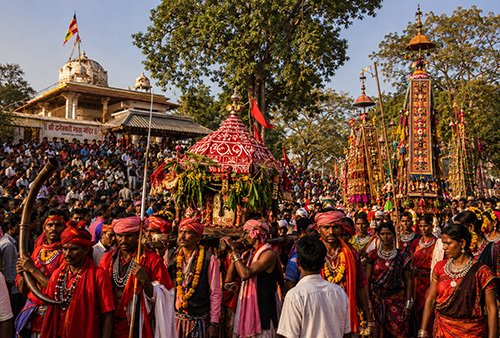 The longest festival in the world, Bastar Dussehra is a 75-day assembly of tribal deities and ancestral heritage.
Rituals: Construction and pulling of a massive double-decker chariot by over 400 tribesmen.
Deity: Ma Danteshwari, the protector goddess of the Bastar region.
Music & Soundscape: Thick with the sound of tribal drums and the ‘Turhi’ brass trumpet.
Photography & Visuals: Sheer scale of the chariot and mass of pullers. Torches (Mashals) at night offer dramatic lighting.
Delicacies: ‘Amat’ tangy bamboo shoot soup and local ‘Mahua’ spirit.
Peaks ‘n’ Sands Insight: A lesson in massive-scale team development—the chariot’s construction requires perfect rhythm.
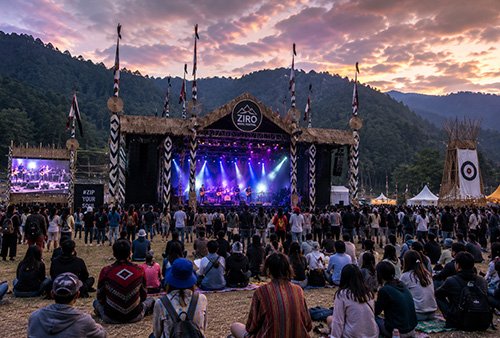
Set in the emerald-green Ziro Valley, home to the Apatani tribe, this festival is a testament to eco-friendly living and independent music.
Background: The festival is built using locally sourced bamboo and is designed to have zero plastic waste. It is a pilgrimage for music lovers who prefer the outdoors over crowded stadiums.
Rituals:Visitors often visit Apatani villages to see the famous nose-plugged elders and learn about their unique ‘land-sharing’ agricultural practices.
Music & Soundscape: A diverse mix of indie rock, folk-fusion, and electronic music in a natural amphitheater.
Photography & Visuals: Apatani elders with iconic tattoos and nose plugs. Lush rice fields and pine-covered mountains.
Delicacies: Bamboo-steamed chicken and Apatani rice beer in bamboo mugs.
Peaks ‘n’ Sands Insight: Reflects commitment to sustainable outdoor learning and finding harmony with the landscape.
August/September | Afternoon to Evening Event
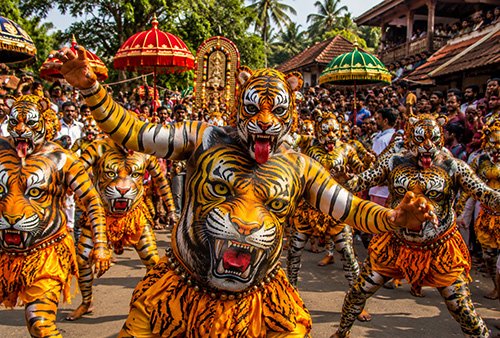 Puli Kali, or the ‘Tiger Dance,’ is a vivid folk art performed during the harvest festival of Onam. The streets of Thrissur turn into a sea of yellow and black as hundreds of men transform into tigers.
Rituals: Performers spend hours having their bodies painted in painstaking detail. They then dance to the frantic beats of the ‘Chenda’ drums, mimicking the movements of a tiger being hunted by a man.
Music & Soundscape: Frantic, heavy beat of ‘Chenda’ drums. Synchronized percussion designed to get the ‘tigers’ dancing.
Photography & Visuals: Intricate body art captured in close-up macro shots. Movement against the golden Keralan sun.
Delicacies: The ‘Onam Sadhya’—a massive 24-item vegetarian feast served on a banana leaf.
Peaks ‘n’ Sands Insight: Shows the power of folk art as a tool for public alignment and vibrant cultural storytelling.
November – February | Most magical on Full Moon Nights
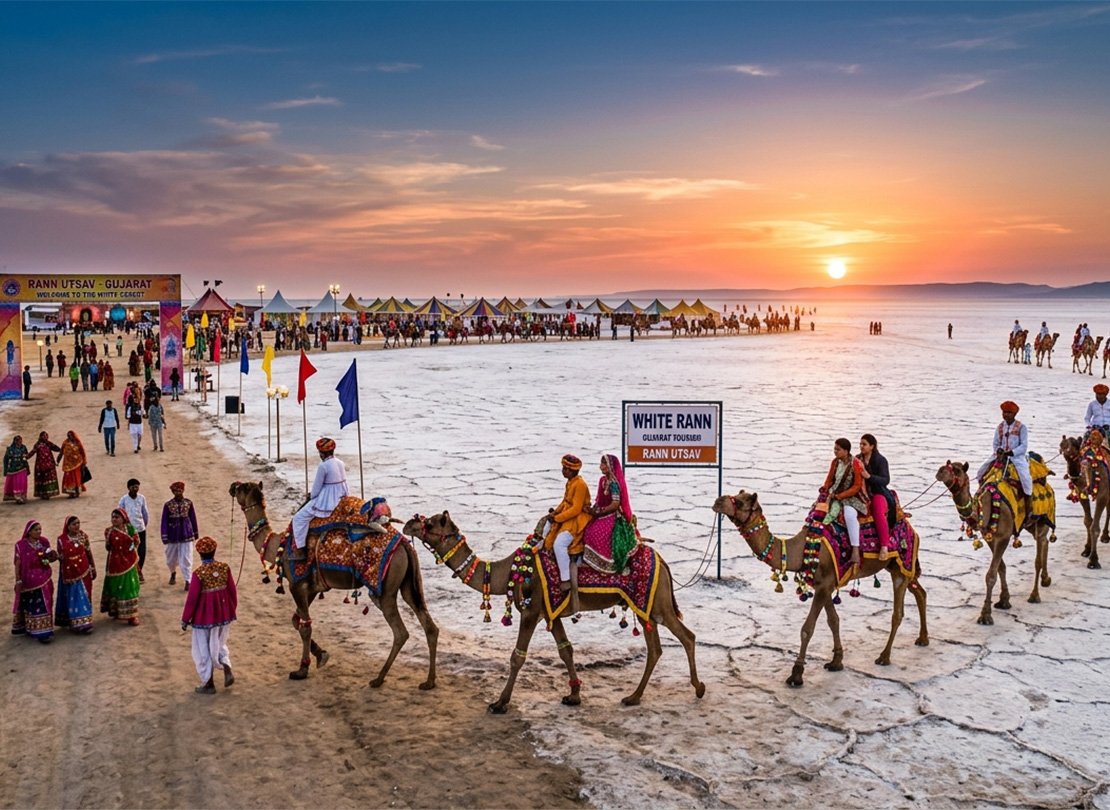
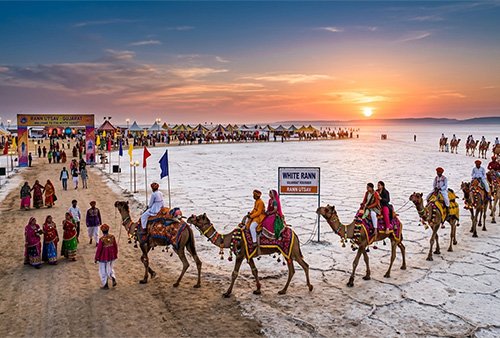 The Great Rann of Kutch turns into a white desert wonderland celebrating heritage, handicrafts, and folklore.
Background: Under the full moon, the Great Rann of Kutch—a massive salt marsh—turns into a shimmering white mirror.
Rituals: Cultural nights feature ‘Garba’ and ‘Dandiya’ dances. Local artisans demonstrate ‘Ajrakh’ block printing and ‘Rogan’ art.
Music & Soundscape: Soulful desert music on the ‘Morchang’ (jaw harp). ‘Kafi’ folk songs are narrated under the stars.
Photography & Visuals: Full moon nights are the pinnacle; the salt desert glows blue-white, creating an ethereal landscape.
Delicacies: ‘Bajra na Rotla’ with spicy garlic chutney and local ‘Khichdi.’
Peaks ‘n’ Sands Insight: The ‘Sands’ of Kutch represent the pinnacle of desert craftsmanship and resilience.
February | Evening Event (7 PM onwards)
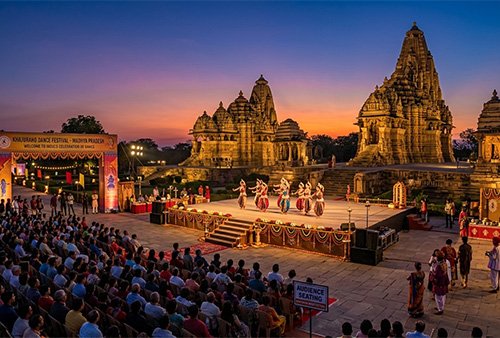 This festival is a bridge between stone and movement. It is held against the backdrop of the UNESCO-listed Khajuraho temples, famous for their intricate erotic and social carvings.
Rituals: The festival is a ‘Sadhana’ (dedication) for Indian classical dancers. Performing here is considered a career pinnacle for Kathak, Odissi, and haratanatyam artists.
Architecture: The lighting highlights the ‘Nagara’ style architecture, creating a dramatic, ethereal stage.
Music & Soundscape: Classical sounds of Sitar, Flute, and Tabla synchronized with the ‘ghungroo’ (bells) of dancers.
Photography & Visuals: Interplay of light and shadow on temple carvings. Grace of dancers against static stone.
Delicacies: Central Indian treats like ‘Bhutte Ka Kees’ (grated corn cooked in spices) and ‘Kusli’ (sweet fried dumplings) are local favorites.
Peaks ‘n’ Sands Insight: A study in architectural precision and the high-discipline required for classical arts.
November | Evening Event
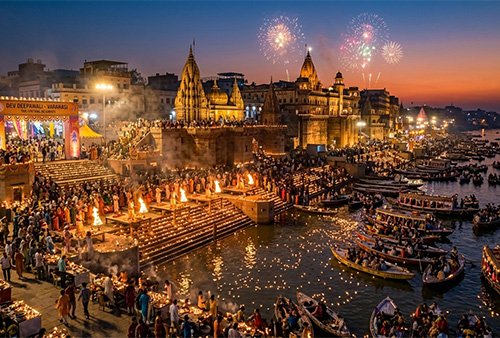 Varanasi, the ‘City of Light,’ lives up to its name on Dev Deepawali. It is believed that the Gods descend to Earth to bathe in the Ganges on this day.
Rituals: Every single ghat (there are over 80) is lit with earthen lamps. The ‘Maha Aarti’ at Dashashwamedh Ghat is a grand spectacle involving rhythmic chanting and massive fire lamps.
Music & Soundscape: Thunderous bells, conch shells (Shankh), and rhythmic Vedic chanting vibrating through the ground.
Photography & Visuals: Boat rides for a panoramic view of the ‘necklace’ of lights. Reflections in the Ganges.
Delicacies: ‘Banarasi Paan’ and street food like ‘Tamatar Chaat.’
Peaks ‘n’ Sands Insight: The ultimate visual of synergy—thousands of lamps lighting up a city in a collective act of faith.
September/October | Day Procession & Night Palace Lighting
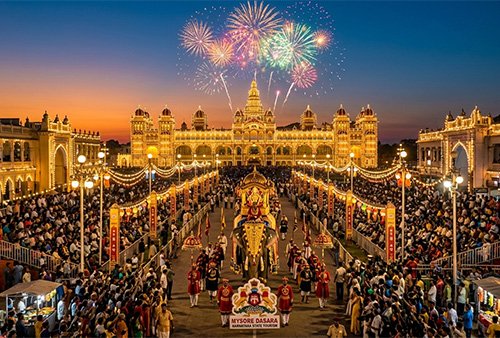 Mysore Dasara is ‘Nada Habba’ (State Festival), a royal celebration of the victory of Goddess Chamundeshwari over the demon Mahishasura. A royal celebration of victory of good over evil. The city of palaces turns into a royal stage for ten days.
Background: The Mysore Palace is lit with 100,000 bulbs, glowing like a diamond in the night.
Rituals: ‘Jumboo Savari’ grand finale—a procession of decorated elephants carrying the golden idol.
Music & Soundscape: Folk-dance groups and royal bands playing traditional Carnatic and brass-band music.
Photography & Visuals: Mysore Palace lit by 100,000 bulbs. Regal elephants and warriors in full costume.
Delicacies: Sample ‘Mysore Pak’ and ‘Bisi Bele Bath.’
Peaks ‘n’ Sands Insight: A royal case study in pageantry, coordination, and team discipline.
September | Day Event
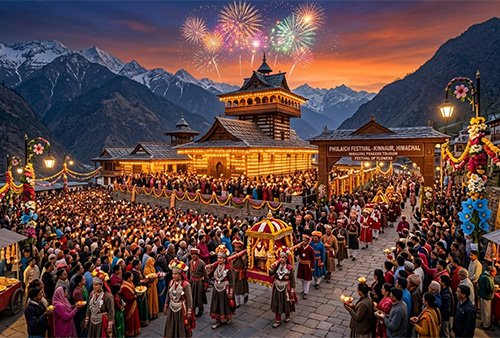 The ‘Festival of Flowers’ celebrating high-altitude flora and ancestral ties in Kinnaur.
Rituals: Young men trek to the high ridges to collect rare mountain flowers. Upon their return, the village celebrates with community dances. It is also a time to consult the village deity through the ‘Groksch’ (oracle).
Deity: Dedicated to the local ‘Devtas’ who protect the mountain passes.
Music & Soundscape: ‘Karnal’ brass trumpets and ‘Ransingha’ announce the deity. Narrative folk songs.
Photography & Visuals: Environmental portraits with traditional caps (Thepang) and wildflower garlands.
Delicacies: Buckwheat pancakes (Chilra) and salted butter tea.
Peaks ‘n’ Sands Insight: Highlights the ‘Peaks’ of the Himalayas and the deep connection with mountain ecology.
Once in 12 Years | Multi-day Day Event
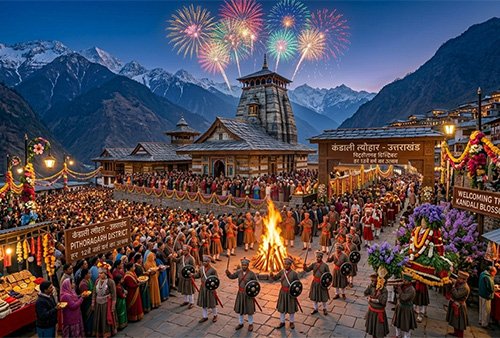 The Kandali festival of the Shauka tribe is rare, occurring only once every 12 years when the Kandali flower blooms.
Background: It commemorates a historical victory where women fought off an army of invaders.
Rituals: Women lead a procession into the valley to ‘uproot’ the Kandali plants, symbolizing the destruction of the enemy. They wear their finest silver heirloom jewelry and heavy Woolens.
Music & Soundscape: Led by ‘Damau’ and ‘Dhol’ drums, with women singing songs of bravery.
Photography & Visuals: Every shot is historic. Intricate silver jewelry and the unique Kandali bloom.
Deity: A mix of local mountain spirits and Hindu deities are worshipped for the prosperity of the valley.
Peaks ‘n’ Sands Insight: A powerful narrative of historical bravery and long-term team legacy
February/March | Day Event
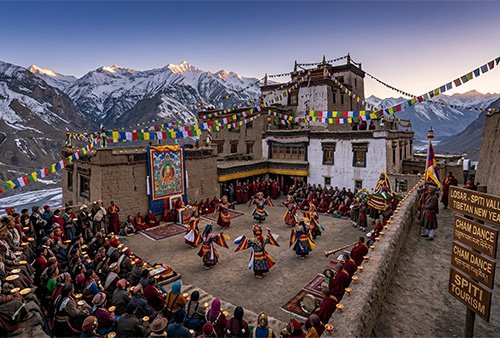 Tibetan New Year celebrated with masked dances and joy in the snow-bound cold desert landscapes.
Rituals: Families clean their homes to drive away the ‘bad luck’ of the previous year. In monasteries, masked dancers perform rituals to banish evil spirits.
Culture: It is a time of extreme hospitality, where every door is open to travelers for tea and barley snacks.
Music & Soundscape: Chanting of ‘Om Mani Padme Hum’ and rhythmic clash of monastery cymbals and conch shells.
Photography & Visuals: White snow provides a clean background for colorful prayer flags. Night shots of butter lamps.
Delicacies: ‘Guthuk’ is a special noodle soup served on New Year’s Eve, containing nine ingredients. One ‘dough ball’ in the soup often contains a hidden item (like salt or coal) that predicts the eater’s character for the year.
Peaks ‘n’ Sands Insight: The ‘Peaks’ of winter survival and the warmth of community bonding.
Irregular | Multi-day Day Event
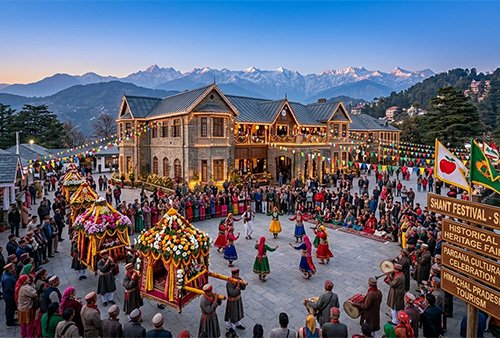 Shant is a rare and sacred temple festival that takes place when a village temple is renovated or a significant community milestone is reached.
Rituals: It involves the ‘hosting’ of several neighboring village deities. The deities are carried on ‘Raths’ (palanquins) and perform a symbolic ‘meeting’ dance.
Architecture: Kath-Kuni wood and stone architecture of temples decorated with marigolds. Photography & Visuals: Chaotic, high-energy meeting of multiple ‘Raths.’ Intricate wood carving textures.
Culture: The folk singing is often competitive, with different villages singing ‘Harlis’ (narrative songs) about their local history and legends.
Peaks ‘n’ Sands Insight: An exercise in cross-community collaboration and indigenous architecture preservation.