

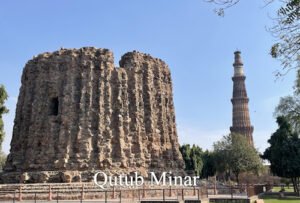
The “Tower of Victory.” Its story is “Epigraphic Splendor”—the bands of calligraphy on the tower aren’t just religious; they are historical records of the different rulers who added to its height over 300 years.
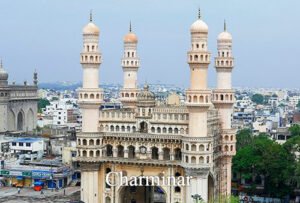
The “Talisman of the City.” Built in 1591 to celebrate the end of a plague. The story says there is a secret tunnel connecting Charminar to Golconda Fort, built as an escape route for the royal family.
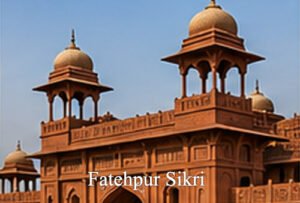
The “Ghost City.” Akbar built it as his capital but abandoned it after 14 years. The story is “Water Scarcity”—the massive city was perfectly designed but the local wells simply couldn’t support the population.
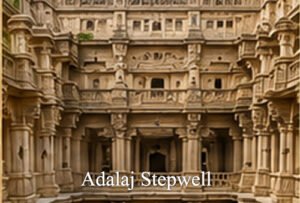
A story of “Tragedy and Grace.” It was built by Queen Rudabai to honor her late husband. The legend says the architect jumped into the well upon completion so he could never replicate its beauty for anyone else.
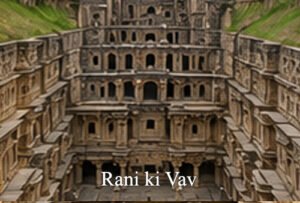
The “Queen’s Stepwell.” It was buried under silt for centuries by the Saraswati River. The story is “Discovery”—when excavated in the 1980s, the carvings were found in pristine condition, as if the mud had acted as a protective time capsule.
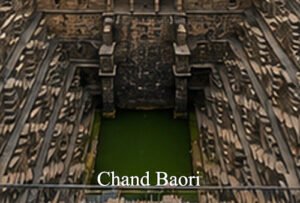
A “Geometric Maze.” With 3,500 steps, it is one of the world’s deepest. The story is “Thermal Comfort”—at the bottom of the well, the air is always 5-6 degrees cooler, making it a 1,000-year-old air-conditioned community center.
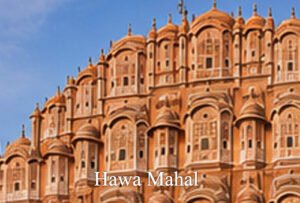
The “Screen of the City.” It has 953 windows. The story is “Social Design”—it allowed royal women to observe the vibrant festivals in the street below without being seen themselves, while the “Venturi effect” kept the interior breezy.
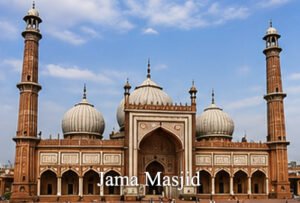
The “Friday Mosque.” The story is “Scale”—it was built by 5,000 workers over six years. Its courtyard is so large it can hold 25,000 people, making it the heartbeat of Old Delhi for centuries.
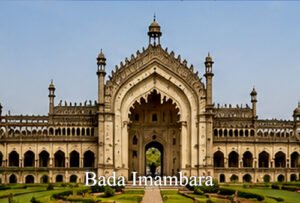
The “Pillarless Wonder.” The central vaulted hall is 50 meters long and 15 meters high without a single beam or pillar. The story is “Famine Relief”—it was built as a “work-for-food” project to support the people during a great drought.
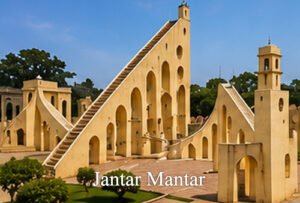
The “Stone Observatory.” It houses the world’s largest stone sundial. The story is “Precision”—it can measure time to within two seconds, proving that 18th-century Indian science was far ahead of its time.
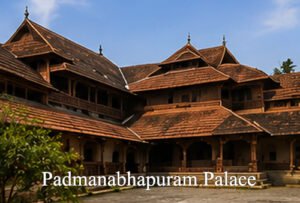
The “Wooden Marvel.” Built with teak and rosewood without many nails. The story is “Cooling Floors”—the floors are made of a secret mixture of burnt coconut shells, egg whites, and plant extracts that stay cold even in tropical heat.
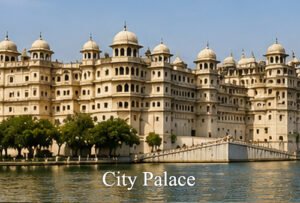
A “Vertical Labyrinth.” It wasn’t built all at once but grew over 400 years. The story is “Defensive Luxury”—narrow hallways and sudden turns were designed to trap intruders while the royal family escaped through hidden doors.
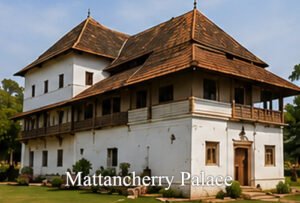
The “Exchange of Cultures.” Built by the Portuguese and gifted to the Kochi Raja. The story is “Syncretic Art”—it features some of the best Hindu murals in India alongside European-style architecture.

The “Golden Bell.” One of its bells is so large that its sound can be heard miles away. The story is “Portuguese Grandeur”—it was built to be larger than any church in Portugal itself to show the power of the colonial empire.

A story of “Incorruptibility.” It holds the remains of St. Francis Xavier. Legend says the body remained fresh for years without embalming, making it a site of pilgrimage for people of all faiths.
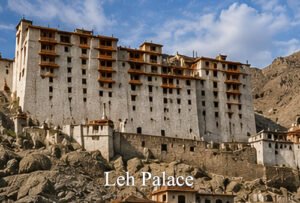
The “Lhasa of India.” Modelled after the Potala Palace in Tibet. The story is “High-Altitude Survival”—its massive stone walls are tilted inward to provide stability against the freezing winds and weight of Himalayan snow.
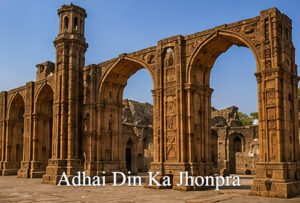
The “2.5-Day Mosque.” Legend says it was converted from a Sanskrit college into a mosque in just two and a half days. The story is visible in the architecture; Hindu temple pillars are clearly visible supporting the Islamic arches.
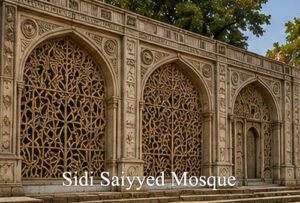
The “Tree of Life.” The stone lattice (Jali) window is so famous it is the unofficial symbol of the city. The story is “Artistic Patience”—each branch and leaf of the tree was carved from a single slab of yellow sandstone.
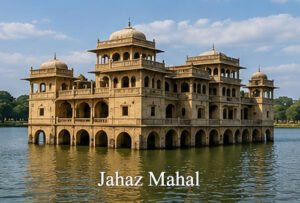
The “Ship Palace.” Built between two lakes, it looks like a ship floating on water. The story is “Rainwater Passion”—the ruler Ghiyas-ud-din was so obsessed with water that he designed the palace to harvest every drop that fell on its roof.
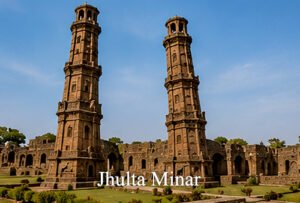
The “Shaking Minarets.” When one minaret is shaken, the other shakes after a few seconds, but the passage between them stays still. The story is “Lost Science”—the secret of the flexible joints has never been fully solved by modern engineers.

The “Gate of Magnificence.” The story is “Gratitude”—Akbar built this 54-meter-high gate to commemorate his victory over Gujarat. An inscription on the gate famously quotes Jesus, reflecting Akbar’s interest in all religions.
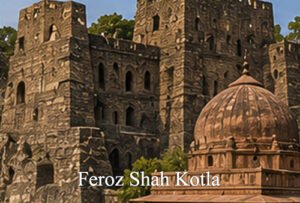
The “City of Spirits.” People still come here on Thursdays to leave letters and petitions for the Djinnis said to live in the ruins. The story is “Ancient Continuity”—the 2,300-year-old Ashokan pillar on top was brought here by a Sultan who was obsessed with its mysterious “unbreakable” polish.
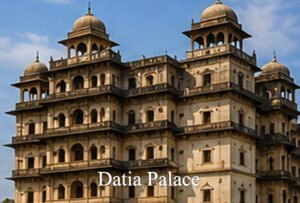
The “Palace of No Residents.” It has seven stories but was never actually lived in. The story is “Unfinished Omens”—it was built for the Mughal Emperor Jehangir, but he only spent one night there, and it was abandoned as an ill omen shortly after.
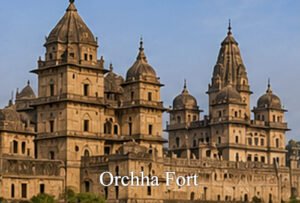
A “Royal Welcome.” It was built by a local king specifically for a one-night visit by Emperor Jehangir. The story is “Hospitality at Scale”—an entire palace of 136 rooms was constructed just to impress a single guest.
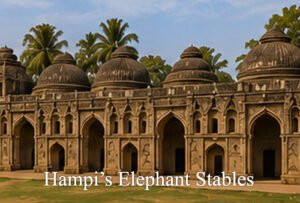
The “Royal Garage.” Each of the 11 chambers features a different style of dome (Hindu, Islamic, and Jain). The story is “Pluralism”—the Vijayanagara Kings were so cosmopolitan that even their elephant stables reflected the architectural diversity of their empire.