

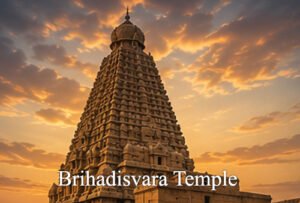
A story of “Gravity and Grit.” The 80-ton stone capstone (Kumbam) was moved to the top of the 216ft tower via a 6km long earthen ramp. It is designed so that at certain times of the year, the main tower casts no shadow on the ground at noon.
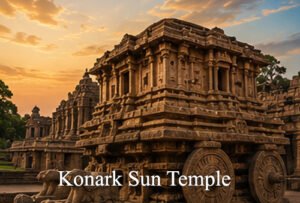
A “Stone Calendar.” The 24 wheels of this chariot temple are sundials. By looking at the shadow cast by the spoke of the wheel, ancient astronomers could calculate the time of day down to the minute.
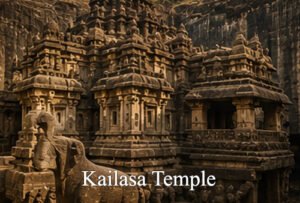
This is the story of “Negative Space.” Artists didn’t build it; they “unbuilt” the mountain. Starting from the top, they carved 200,000 tons of rock away to reveal a multi-story temple complex. It is the largest monolithic structure in the world.
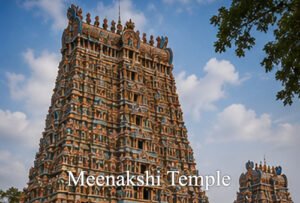
The “City of the Thousand-Pillar Hall.” Each pillar is a story in stone, but the most famous is the “Hall of Pillars” where the geometry is so perfect that from any angle, the pillars appear to be in a straight line.
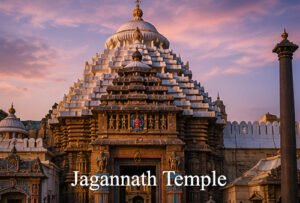
A site of “Anomalies.” Legend and observation say that the flag atop the temple always flutters in the opposite direction of the wind, and no bird or plane is ever seen flying above the temple dome.
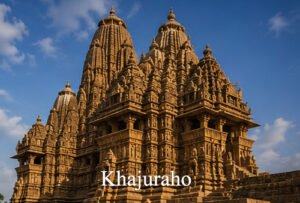
These temples tell a story of “Total Human Experience.” While famous for erotic carvings, these represent only 10% of the art; the rest depicts the daily life, music, and spiritual aspirations of a society that viewed the physical and spiritual as one.
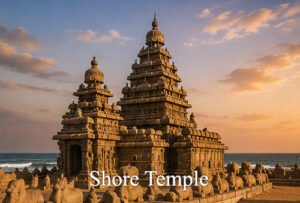
For centuries, sailors called this the “Seven Pagodas.” The story goes that six other temples were swallowed by the sea. During the 2004 Tsunami, the receding waters briefly revealed the ruins of these “lost temples,” confirming the ancient maritime legends.
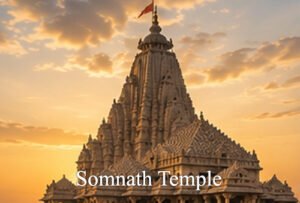
The “Shrine Eternal.” It has been destroyed and rebuilt seven times. Its story is one of cultural resilience. It also houses the Bana Stambha (Arrow Pillar), which claims there is no land in a straight line from that point to the South Pole.
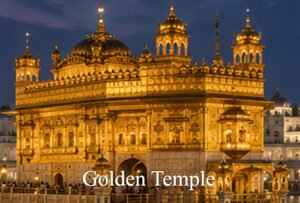
Built on a level lower than the surrounding land, the story is one of “Humility.” Unlike most temples where you climb up, here you must walk down, symbolizing that all are equal before the divine.
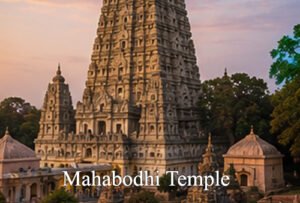
The “Navel of the Earth.” This is the site of Buddha’s enlightenment. The story is preserved in the Vajrasana (Diamond Throne), which marks the exact spot where he sat. The temple architecture itself was the blueprint for Buddhist pagodas across Asia.
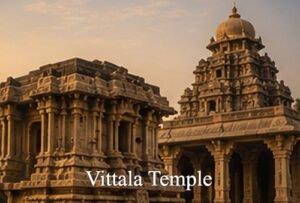
Home to the “Stone Chariot” and “Musical Pillars.” When tapped, the 56 granite pillars produce musical notes. British explorers were so baffled they cut two pillars open to see if they were hollow—they were solid stone.
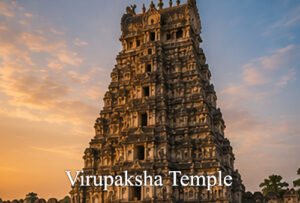
This temple survived the 1565 destruction of Hampi. Its most famous “story” is a simple pinhole camera effect: in a dark chamber, a small hole in the wall projects an inverted shadow of the main 160ft temple tower.
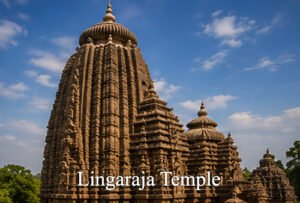
A story of “Architectural Maturity.” Every inch of the 180ft tower is carved. It represents the Kalinga style at its peak, where the stone is treated like lace, defying the weight of the massive structure.
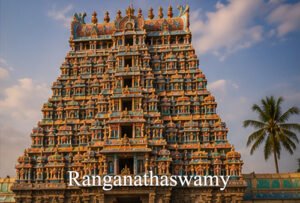
A “Temple City” with 21 towers. The story here is scale; it is the largest functioning temple in the world. Its Rajagopuram was a project that spanned centuries, finally completed only in 1987.
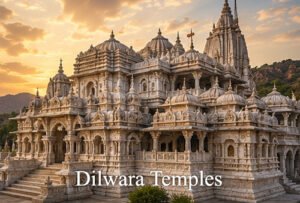
A story of “Marble Silk.” The carvings are so delicate and translucent that light passes through the stone. It is said the artisans were paid not by the day, but by the weight of the marble dust they carved away.
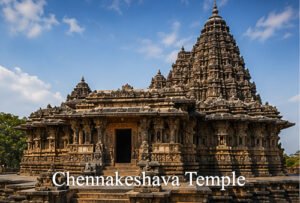
Known for the Darpana Sundari (Lady with the Mirror). The Hoysala artisans used soapstone, which is soft when quarried but hardens over time, allowing for jewelry-like detail in the sculptures.
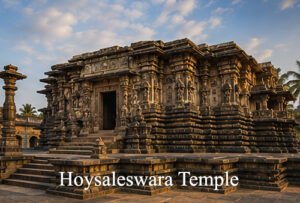
A “Museum in the Open.” It has over 20,000 sculptures. The story goes that after 86 years of labor, the temple was never officially completed because the carvings were so endless and detailed.
The “Theatre of Light.” On the day of the Equinox, the sun’s rays move through the temple pillars and fall directly on the gold statue of the Sun God. Its stepped tank (Surya Kund) is a geometric masterpiece of 108 miniature shrines.
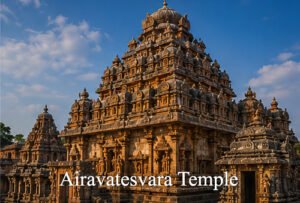
Named after the white elephant of Indra. The temple has “Singing Steps”—stone stairs that produce different musical notes when walked upon, a secret hidden in the density of the stones used.
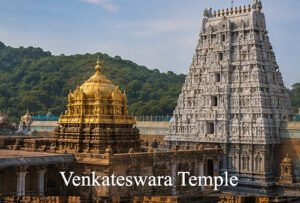
The “Temple of the People.” Its story is one of immense faith and economy; it is the world’s most visited place of worship. The practice of hair tonsuring here is a story of “surrendering the ego.”

The “Kingdom of Krishna.” The five-story temple sits at the edge of the Arabian Sea. The story tells of a city submerged under the waves, a legend supported by modern underwater archaeological finds of ancient stone walls.
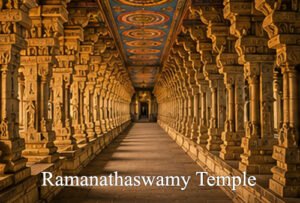
Home to the longest corridor inthe world. The story is of “Pilgrim’s Progress”—the 22 sacred wells within the temple each have water of a different temperature and taste, despite being right next to the salt sea.
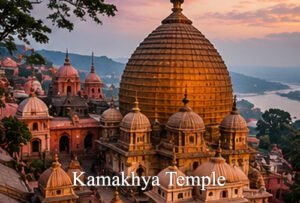
A story of “Primordial Energy.” It is one of the oldest Shakti Peethas. The unique “beehive” architecture of the dome (Nilachal style) was a local response to the need for earthquake-resistant sacred spaces.
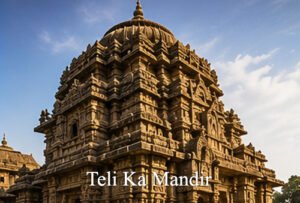
The name means “Oilman’s Temple.” It is a story of “Cultural Synthesis”—it uses a South Indian Gopuram roof on a North Indian base, proving that even in the 8th century, architectural ideas traveled thousands of miles.
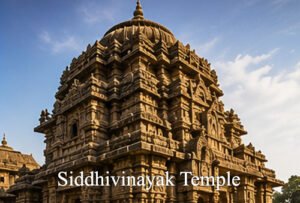
A story of “Urban Faith.” Originally a tiny 3.6m structure in 1801, it has grown into the spiritual heart of Mumbai, reflecting the city’s own growth from a cluster of islands to a global metropolis.