

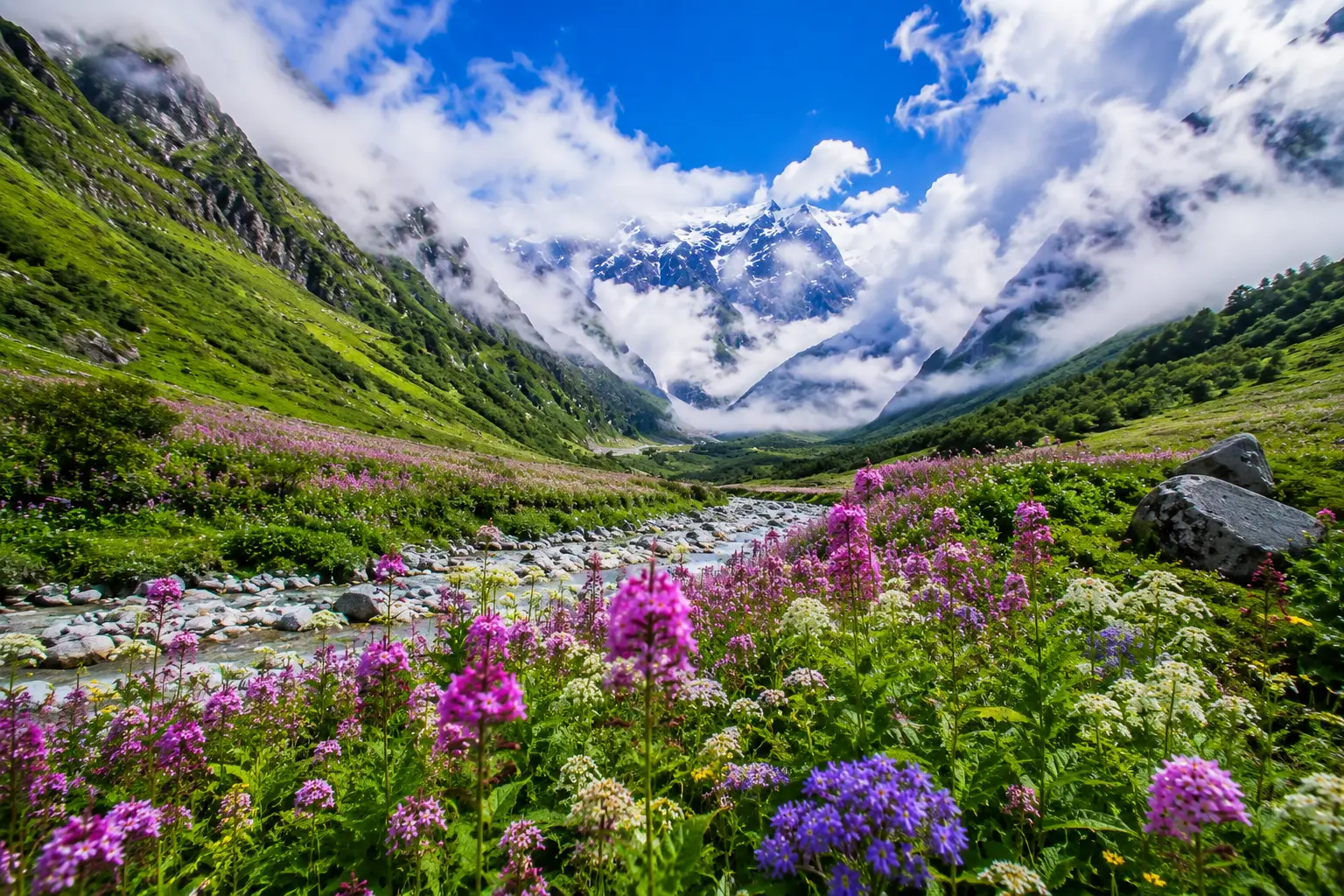
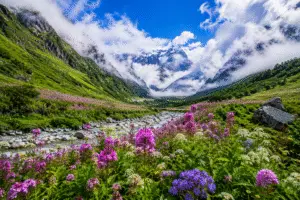
The Valley of Flowers isn’t just another Himalayan trek—it’s an experience that quietly changes the way you look at nature. Every monsoon, this UNESCO World Heritage Site transforms into a vibrant carpet of alpine flowers, with hundreds of species blooming against a backdrop of misty mountains, waterfalls, and snow-clad peaks. But what many travelers don’t realize is that the real journey begins long before you step onto the trail.
Preparation is what turns a good trip into an unforgettable one.
The first thing to understand is that the Valley of Flowers is a high-altitude trek. While the trail is considered moderate, you’ll be walking several kilometers each day, often on uneven terrain. A few weeks of regular walking, stair climbing, and light cardio can make a remarkable difference. Comfortable trekking shoes, rain protection, layered clothing, a reusable water bottle, and a small daypack are essentials you’ll thank yourself for carrying.
One of the most fascinating aspects of the valley is the science behind its breathtaking bloom. The flowers don’t appear all at once. As the snow melts and the monsoon brings moisture, different species bloom in carefully timed cycles. Depending on when you visit, the landscape changes dramatically—from delicate primulas and anemones in the early season to vibrant Himalayan blue poppies, orchids, asters, and brahma kamal in the later weeks. Every visit tells a different botanical story.
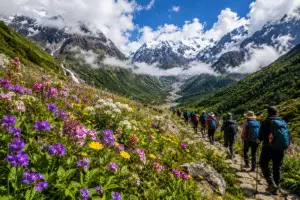
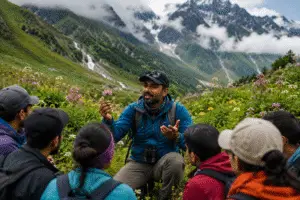
At Peaks ‘n’ Sands, we believe that understanding nature makes you appreciate it even more. Our trek leaders don’t just guide you along the trail—they help you discover the ecology of the valley, identify native alpine flora, explain the unique ecosystem that supports these rare species, and share stories about the butterflies, Himalayan birds, and occasional wildlife that inhabit the region. Instead of simply walking through the valley, you begin to understand why it is considered one of India’s greatest natural treasures.
Photography is another highlight that deserves a little preparation. The Valley of Flowers rewards patience far more than expensive equipment. Soft morning light, low clouds rolling through the valley, and tiny dew drops resting on petals often create the most magical frames. Rather than photographing only wide landscapes, take time to notice the smaller details—a single flower glowing after rain, butterflies resting on blossoms, or the texture of moss-covered rocks. These intimate moments often become the photographs you cherish the most.
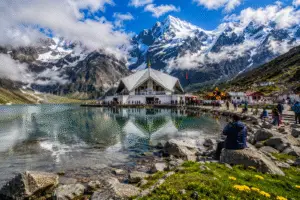
Our experts at Peaks ‘n’ Sands also share practical photography tips throughout the trek—from identifying the best viewpoints and ideal lighting conditions to composing landscape shots, protecting your camera during sudden showers, and capturing macro details without disturbing the fragile ecosystem. Even smartphone photographers often return with images they’re proud to frame.
Perhaps the most important preparation, however, is mental. The Valley of Flowers isn’t about rushing to complete a trek. It’s about slowing down. Listening to mountain streams. Watching clouds drift across the peaks. Breathing crisp Himalayan air. Every turn in the trail offers something that no photograph can fully capture.
When you travel with Peaks ‘n’ Sands, you’re not simply joining a trek. You’re travelling with experienced mountain professionals who focus on safety, responsible trekking, environmental awareness, local insights, and meaningful learning. Whether it’s understanding the fascinating science of alpine blooms, spotting rare Himalayan species, or helping you capture the perfect sunrise over the valley, we ensure you return with far more than beautiful photographs—you return with stories, knowledge, and memories that stay with you for a lifetime.
Because the Valley of Flowers isn’t just a destination. It’s nature’s classroom, and every step through it teaches you something extraordinary.